The Ultimate Guide to Personal Loans in Hong Kong

Best Personal Loan Options in Hong Kong: Compare & Apply Easily

If you’re seeking a personal loan in Hong Kong—whether to manage cash flow, consolidate debts, or fund personal goals—it’s crucial to understand your options, eligibility, and the local lending landscape.

  • Learn what a personal loan is used for
  • Know the difference between the various loan options
  • Understand the steps to apply and compare the best personal rates in Hong Kong

View My Rates

What is a Personal Loan?

A personal loan is an unsecured loan disbursed directly into your bank account. Unlike auto or home loans, which are paid to a dealer or contractor, personal loans offer flexibility and can be used for any legal purpose, including debt consolidation, medical expenses, or major purchases. These loans do not require collateral, but approval is based on your creditworthiness and income.

What can a personal loan be used for and what are its benefits?

Flexible Usage

One thing great about personal loans is that it is not restricted in its use but the most common usage are: Family Emergencies, Medical Emergencies, Wedding Expenses, Vacation Expenses, Household Furnishing, Renovation, Honeymoon Expenses, Credit Card Bills, Fund a Start-up, Educational Expenses, Make an Investment, Debt Consolidation.

What is a Debt Consolidation Loan?

A debt consolidation loan streamlines your financial obligations by combining multiple debts into one manageable facility. Rather than juggling various debts with differing sizes, lenders, due dates, tenures, and interest rates, this tool allows you to simplify repayments. By consolidating debts, you can often secure a lower interest rate and extend the repayment tenure, resulting in reduced monthly installments and increased disposable income.

Benefits of Personal Loan

  1. Fast Application and Disbursement
  2. Large Loan Amounts Relative to Income
  3. No Need for Collaterals 
  4. Flexible Repayment Terms

Type of Personal Loans in Hong Kong

Loan Types Table
Features Personal Instalment Loans Revolving Credit Facilities
Loan Structure Lump sum disbursed upfront, repaid in fixed monthly instalments over a set period Pre-approved credit line; borrow as needed, repay and re-borrow within the limit
Repayment Term Fixed (usually 6 to 60 months) No fixed term; ongoing facility as long as minimum monthly payments are met
Usage One-time needs: debt consolidation, large purchases, etc. Ongoing or unpredictable needs: cash flow, emergencies, etc.
Loan Types Table
Secured Loans Unsecured Loans
Require collateral such as property or fixed deposits. Typically offer lower interest rates but risk asset forfeiture if you default. No collateral required. Approval depends on income, employment, and credit score. Interest rates are generally higher.

Now, let us explore a typical journey of a personal loan application

A personal loan is an unsecured loan disbursed directly into your bank account. Unlike auto or home loans, which are paid to a dealer or contractor, personal loans offer flexibility and can be used for any legal purpose, including debt consolidation, medical expenses, or major purchases. These loans do not require collateral, but approval is based on your creditworthiness and income.

1. Assess Your Needs and Eligibility

(a) Determine Loan Purpose: The initial step in applying for a personal loan is to clearly identify why you need the funds. Are you planning to make a significant purchase, cover the costs of a wedding or major home renovation, consolidate existing credit card debt, or handle unexpected financial emergencies?

(b) Check Eligibility: Most Licensed Moneylenders requires borrowers to meet some basic requirement before a loan can be taken. This includes:

  • Age: 18 years or above
  • Residency: Hong Kong resident
  • Minimum Income: Typically HK$5,000/month
  • Documentation: Proof of income (last 3 months), ID, address proof. Payroll account holders may not need to submit income proof
  • Credit Assessment: Banks review your credit history using the new Credit Data Smart (CDS) system, which pools data from multiple credit reference agencies for a more comprehensive score
  • Under Credit Data Smart, you will be entitled to a free consumer credit report from TransUnion every 12 months. 

If lenders are not part of this system, you can request for a one-off credit report from TransUnion at a cost of HK$280. Click here to find out more about Credit Reports by TransUnion.

(c) Review Credit Standing: Banks will assess your credit history and debt service ratio (DSR) to determine your repayment ability

Debt Servicing Ratio

The Debt-Service Ratio (DSR) serves as a vital gauge to assess your financial capacity post meeting existing debt obligations. Utilized by banks as a pivotal metric, this calculation determines if you possess sufficient funds to cover monthly installments.

The formula entails dividing total monthly commitments by total monthly income and multiplying by 100%, exemplified as follows:Your DSR is a key metric banks use to assess your repayment ability. It’s calculated as:

HK$ (Total Monthly Commitments) ÷ HK$ (Total Monthly Income) x 100% = DSR

Hong Kong’s private sector DSR was 35.6% as of September 2024, indicating relatively high household leverage compared to regional peers. Keeping your DSR low improves your loan approval chances.

2. Research and Compare Loan Options

Compare Products: Hong Kong offers a wide range of personal loan choices, with numerous banks and financial institutions providing products tailored to different needs, budgets, and preferences. These loans differ in aspects such as interest rates, fees, repayment periods, eligibility criteria, and more. Therefore, it’s essential to carefully review and compare your options to secure the most suitable loan for your situation. That said, manually comparing a large number of loan products can be a time-consuming and overwhelming task.

Compare Banks and Licensed Moneylenders

Loan Types Table
Banks Licensed Moneylenders
Loan Structure Typically above HK$10,000 and up to 18-21 times monthly salary depending on banks No statutory minimum or maximum amount, but most follow lending criteria of banks
Tenure Ranges from 12 to 60 months, in increments of 6 months (eg. 6, 12, 18, ……, 60 months) Ranges from 10 to 60 months, but provide more flexible repayment terms
Interest Rates Most banks provide loans with flat monthly interest rates of ~0.15% to 0.75%, with bigger banks providing slightly lower interest rates Licensed Moneylenders generally provide loans with a higher flat monthly interest rate of around ~1.5% to 3%
Fees Typically 0% to 2% loan amount and is subjected to ongoing promotions Illegal to charge processing, establishment, or transfer fees
Document Requirements may be stricter, needing individuals to provide credit scores/report Relatively more lax requirements, with some moneylenders offering loans without credit reports

APR vs EIR

APR vs EIR
Annual Percentage Rate (APR) Effective Interest Rate (EIR)
Definition APR represents the total yearly cost of a loan, including the nominal interest rate plus certain fees (eg. processing fees), expressed as a percentage of the initial loan amount EIR (also known as EAR or AER) reflects the true annual cost of borrowing, taking into account the effect of compounding interest over the year
Calculation The APR can be calculated by multiplying the periodic interest rate (flat monthly interest rates) with the number of periods per year) The EIR is calculated using a special formula in which interest is compounded monthly, resulting in a larger percentage value
Include Fees Yes. Includes interest and other fees No. Focuses on compounding effect
Use Case For comparing loan offers and fixed-rate loans For comparing true cost of compounding
Value Typically of a lower percentage Typically of a higher percentage due to compounding

Use Comparison Platforms: Consider using online loan comparison tools to streamline your search and find the best rates.

If you do not want to go through the hassle of conducting loan research individually, consider using a loan comparison website like Lendingpot where you could be offered multiple loans personalized to your needs. With Lendingpot, you can reduce the tedious process and have customized loans solutions at your fingertips.

3. Prepare Required Documents

Loan Documents Checklist
Loan Application for Salaried Individuals Loan Application for Self-Employed Individuals Loan Application for Non-Permanent Residents
Application Form
Hong Kong ID Card (Non-Permanent HKID)
Passport / Visa NA NA (Work Permit)
Address Proof*
Income Proof i) Latest salary slip (past 1 month)
ii) OR latest salaries tax demand note
iii) OR bank statement/passbook (past 1 month) showing salary entries
i) Latest salaries tax demand note
ii) AND salary slips (past 3 months)
iii) OR bank statements/passbook (past 3 months) showing salary entries
iv) For sole proprietors/partners: Business registration certificate + latest tax demand note
i) Latest salaries tax demand note
ii) AND salary slips (past 3 months)
iii) OR bank statements/passbook (past 3 months)
iv) Proof of current address
Additional Documents i) MPF/ORSO Statements:**
ii) Drawdown Account***
i) MPF/ORSO Statements:**
ii) Tax Return or Employer’s Letter#
iii) Audited Accounts (if applicable)
i) Employment Letter or Contract##

* Recent residential address proof issued within the last 3–6 months (e.g., electricity bill, rates bill, bank statement, or government correspondence)
** For proof of employment or income, if required
*** If you wish to use an account from another bank for loan disbursement or repayment’
# For self-employed or commission-based applicants
## Especially for non-permanent residents or as requested by the bank

Important Notes Box

Important Notes

  • Banks may request additional documents based on your individual application or employment type.
  • Always check with your chosen lender for their specific requirements before applying.

4. Submit Your Application

Most leading banks and licensed moneylenders in Hong Kong provide digital application options through their mobile apps and websites, allowing potential borrowers to apply for loans anytime and potentially receive faster approvals. Applicants can typically upload necessary documents directly to the bank or moneylender’s website or a specialized online portal.

Several moneylenders also offer “No-Show” Loans, enabling customers to complete the entire application process online without ever needing to visit an office or branch in person, with the loan amount disbursed electronically. That said, certain banks and moneylenders may still require applicants to be physically present to finalize their loan applications.

5. Loan Assessment and Approval

Awaiting Review: The bank or licensed moneylenders will review your application, verifies documents, and assess your creditworthiness and repayment ability. Meanwhile, they might request for additional Information which you are required to provide further details or clarification. If approved, you’ll receive a loan offer letter outlining the terms and conditions.

6. Accept the Loan Offer

Understand and Review Terms & Conditions: Thoroughly review the approval letter, paying close attention to the interest rates, repayment schedule, and any applicable fees. Being fully informed about these terms helps you avoid unexpected issues or unpleasant surprises down the line. Refer to our page on Understanding Moneylender’s Ordinance to find out what are the illegal Moneylending Practices in Hong Kong.

Before agreeing to a personal loan in Hong Kong, borrowers should carefully review the agreement documents to ensure they comply with the requirements of the Money Lenders Ordinance and to fully understand their obligations. Key information to look out for includes:

  • Principal Amount: The amount of the loan should be specified in both words and figures.
  • Repayment Terms: Details of the repayment schedule, including the amount and frequency of payments, must be provided.
  • Interest Rate: The interest rate must be clearly stated as a percentage per annum, and the total amount of interest payable should be disclosed.
  • Consequences of Default: The agreement should explain what happens if you fail to make repayments, including any rights the lender has to take to demand immediate repayment.
  • No Illegal Terms: Ensure the agreement does not include illegal terms such as compound interest, excessive interest rates (over 48% per annum), or prohibited fees
  • Additional Charges: Only traditional banks are allowed to charge processing/handling fees, whereas it is illegal for licensed moneylenders to do so!
    • Processing Fees: Typical processing fees range from 0%~2%.
    • Late Fees: Banks typically charges a flat fee, ranging from HK$100 to HK$500, with some opting to charge a ~1% to 3% late fees.
    • Default Fees: A ~2.25% to 3% on overdue installments as fees
    • Early Repayment Fees: Typical 2%~4% of the outstanding principal amount
    • Administrative Fees: HK$50–HK$500 for documents or special document requests

Sign Agreement: Confirm your acceptance by signing the necessary documents, be it in-person or online based on instructions given by the moneylender. Always as for a copy of the Agreement to avoid any disputes in the future.

7. Loan Disbursement

Funds Transfer: The approved loan amount is credited directly to your designated bank account, usually within a few days after approval.

Start Repayment: Repayments typically begin the following month and are often debited automatically from your account.

Typical Timeline of Loans

Loan Timeline
1234567 891011121314
Research & Prepare Docs (1–3 days)
Application Submission (1 day)
Assessment & Approval (1–8 working days)
Disbursement (1–2 days after approval)
Important Notes Box

Additional Tips

  • Check for Early Repayment Fees: Some loans have penalties for early settlement[1][2].
  • Maintain Good Credit: Timely repayments help maintain your credit score for future borrowing.
  • Contact Bank for Assistance: Bank staff can guide you through the process if you have questions or unique circumstances.

What is a Personal Loan?

At Lendingpot, we assist individuals and businesses in making informed decisions by offering professional insights and streamlining the complexities of the lending process.

We provide bespoke recommendations that align seamlessly with your unique financial situations and goals. Lendingpot optimises your borrowing experience while minimising potential risks by accounting for the matters below:

  1. The specific loan amount you require.
  2. The urgency with which the loan amount is needed.
  3. Whether you or your parents own a property that has been held for over ten years.
  4. Your income level.
  5. Your TU score (such as your credit score and credit history).

Get your ideal loan in just 2 minutes

Sign Up and Apply
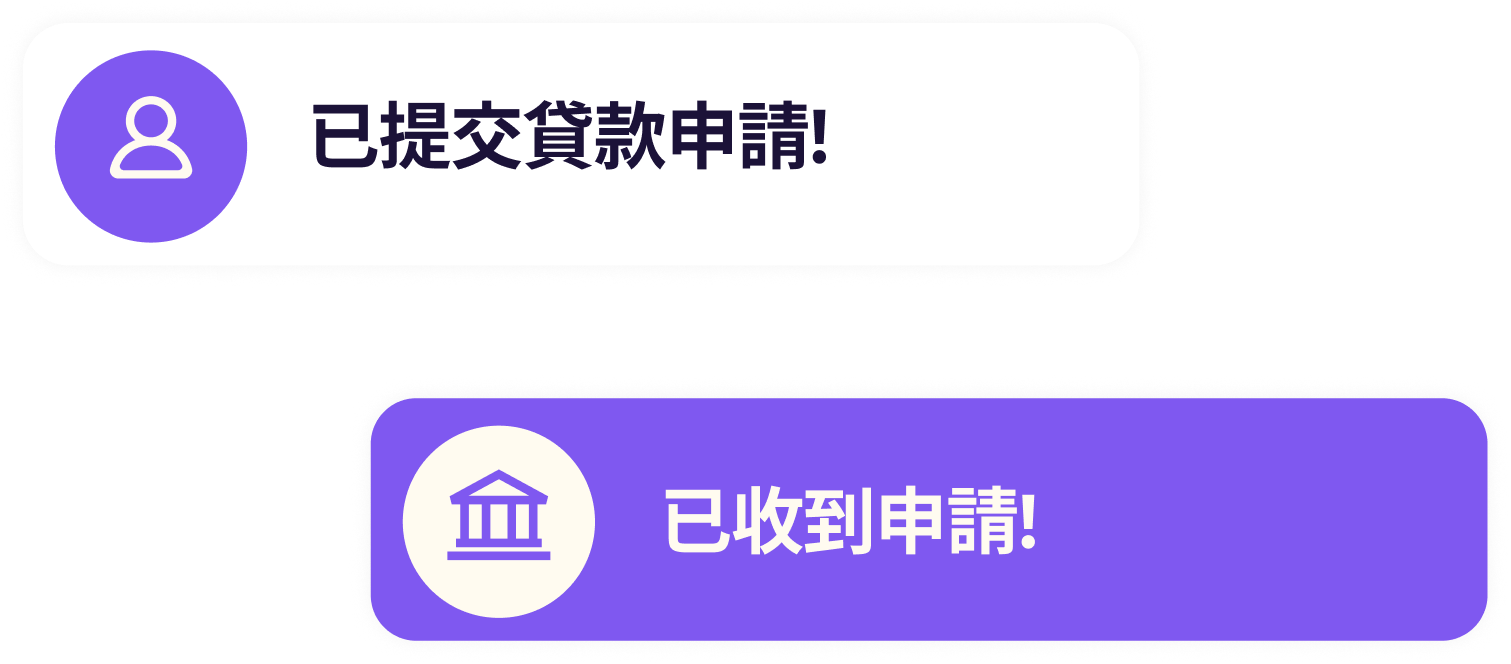
Start by completing our online personal loan application form – simply only takes 5 mins.
List and Get Offers
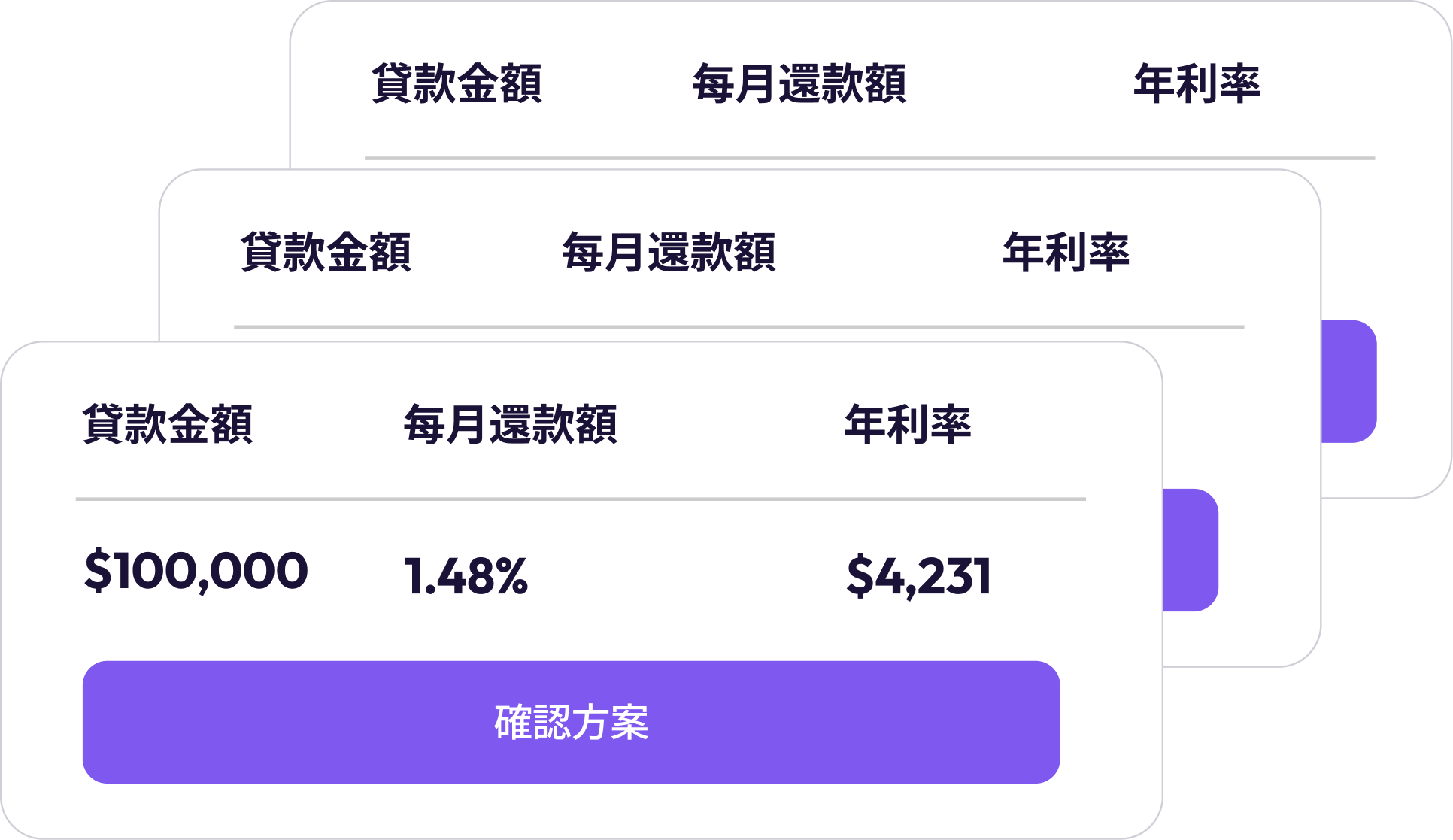
We send your application to lending partners who return with personalised offers for you. Within minutes!
Compare and Select
Log in to your Lendingpot account to view all of your offers, compare the interest rates across the personal loan offers and select the best loan deal.
Get Funded
Upon acceptance, book an appointment to sign the agreement and receive the money on the same day.
Get my personal loan

Why our clients love Lendingpot?

It’s FREE + 0.5% cashback.
Get rewarded when you apply for a personal loan with our platform - which is entirely free to use.Terms & Conditions apply.
Lenders compete for your application.
With multiple banks and moneylenders, only the most competitive loan rates are being put forward.
Dedicated support team.
Need help in your personal loan application or you don’t know where to start? Book a call with our advisory team here. Easy.

Understand Credit Scores in Hong Kong

What is a Credit Score?

A credit score in Hong Kong is a rating that reflects your creditworthiness, based on your credit history, repayment behavior, and financial management. Lenders use this score to assess the risk of lending to you, influencing whether you are approved for loans, credit cards, or mortgages, and what interest rates you are offered

How Are Credit Scores Calculated?

Credit scores in Hong Kong are primarily provided by Credit Reference Agencies (CRAs), such as PingAn OneConnect Credit Reference Services and TransUnion, with the latter being the most established. These companies are a part of the Credit Data Smart (CDS) model. The score is calculated based on several key factors:

  1. Payment History: Whether you pay bills and debts on time is the most significant factor.
  2. Outstanding Debt: The total amount you owe across all credit accounts.
  3. Length of Credit History: How long you have held credit accounts.
  4. Types of Credit: The mix of credit products you use (e.g., credit cards, mortgages, personal loans)
  5. New Credit Applications: Recent applications for new credit accounts

Credit scores are typically graded from A to J, where A is the highest and J the lowest. A higher grade indicates a lower credit risk and can result in better loan terms and higher approval rates.

Loan Types Table
Grade Description Typical Outcome
A - C Excellent Best rates, easy approval
D - H Average/Below Average Moderate rates, possible limits
I - J Poor High rates, possible rejection

Click here to see how your credit score is calculated
A-grade: May qualify for the lowest APRs, sometimes below 5%.
J-grade: Could face APRs as high as 45% or more, reflecting much higher borrowing costs

The Credit Data Smart (CDS) System

Since April 2024, Hong Kong has operated under the Credit Data Smart (CDS) model, which pools consumer credit data from multiple CRAs. This system increases competition among agencies, enhances data accuracy, and allows consumers to obtain a free credit report from each agency once every 12 months.

What’s Included in Your Credit Report?

A credit report in Hong Kong generally contains:

  1. Credit and repayment records (including defaults and late payments)
  2. Bankruptcy and litigation records
  3. Records of credit applications and inquiries in the past two years

If you default on a repayment for more than 60 days, the default record will remain on your credit report for five years after the debt is settled.

Important Notes Box

How to Check Your Credit Score?

You are entitled to request a free credit report from each CRA every 12 months. If you are refused credit by a bank or financial institution, you can request a free credit report from the CRA(s) that provided your data for that application.

Some Moneylenders provide Non-TU Loans. What does this means?

When moneylenders in Hong Kong provide non-TU loans, it means they offer loans without checking the applicant’s credit report from TransUnion (TU), which is Hong Kong’s main credit reference agency. In practical terms, this means:


  • No Credit Report Check: The lender does not retrieve or review your TU credit report during the loan approval process, so your loan application and approval will not appear on your credit file.
  • Easier Approval: These loans are generally easier to apply for, with simpler procedures and often available online. They are particularly aimed at borrowers with poor credit records or those who want to avoid affecting their credit score with a new inquiry.
  • Higher Interest Rates and Lower Loan Amounts: Because the lender cannot assess your full credit risk without a TU report, these loans usually come with higher interest rates and lower maximum loan amounts to compensate for the increased risk.

Why Is Your Credit Score Important?

1. Loan Approval: A good credit score increases your chances of being approved for loans and credit cards

2. Interest Rates: Higher scores often qualify you for lower interest rates and better terms

3. Employment: Some employers may request your credit report as part of their hiring process to assess your financial responsibility

Important Notes Box

Tips to Maintain or Improve Your Credit Score

  • Pay all bills and debts on time, every time.
  • Avoid over-borrowing and applying for multiple credit products at once.
  • Regularly review your credit report for accuracy.
  • Inform lenders early if you have trouble making repayments to potentially arrange alternative solutions.
  • Build a positive history by responsibly using credit cards or small loans and repaying them promptly.